

Advocates for Justice
- Finra Enacts Important Rule to Protect Seniors Against Fraudulent Activity
Turning back to FINRA Rule 2165, the Rule provides a procedure for member firms to place temporary holds on disbursements if there appears to be financial exploitation of the senior or impaired account holder. The Rule allows the brokerage firm to contact people who they know are “trusted contacts” for the senior to alert them to the suspicious circumstances.
As consumer attorneys we regularly evaluate cases involving elders who have lost their retirement savings to Ponzi schemes, Pyramid schemes, real estate fraud, sweepstakes scams – and many more types of fraud. As people age they become more susceptible to undue influence and fraud. When a senior is scammed it can have devastating consequences for their financial and physical health. Fraud against an 80 year old is different than fraud against a 30 year old because the 80 year old is unlikely to be able to replace the lost retirement funds on their own.
Because people keep their money in banks and brokerage accounts, the scammed money will be moved out of the elder’s account, meaning financial institutions have an excellent vantage point to identify fraud. FINRA Rule 2165 allows firms that are subject to FINRA regulation to do more than sit back passively and fill out Suspicious Activity Reports (SARs) while the life savings of a senior is drained from the account.
In implementing FINRA Rule 2165, FINRA was probably also thinking about the best interests of its member institutions, and not just the interests of seniors. This is because California’s Elder Abuse Law (California Welfare & Institutions Code Section 15600 et seq.) allows financial institutions to be held liable if they assist a third party who commits financial elder abuse. Banks and other financial institutions take the position that they can only be liable if they knew for certain that transactions were fraudulent, however, the plain meaning of the statute is broader than this. There is no requirement that assistance be “knowing.”
As financial institutions are aware, there are red flags that often accompany fraudulent transactions—these include more frequent or larger withdrawals from an account; unusual transfers of money into the account when the money is then quickly taken out of the account; transfers to unknown people, including large wire transfers to strangers or out of the country; and an unwillingness by the elderly person to talk about what the funds are for.
For more information the author of this article can be reached at amurphy@cpmlegal.com or by calling (650) 697-6000. Cotchett, Pitre & McCarthy, LLP has a long track record of representing seniors who have been the victim of financial fraud.
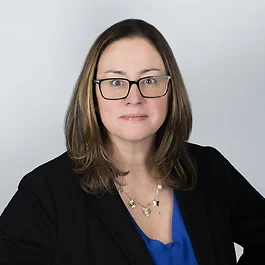 Partner
Anne Marie Murphy is a Principal at Cotchett, Pitre & McCarthy LLP, where she practices civil litigation focusing on complex commercial litigation, class actions, public nuisance litigation, consumers’ rights and elder ...
